
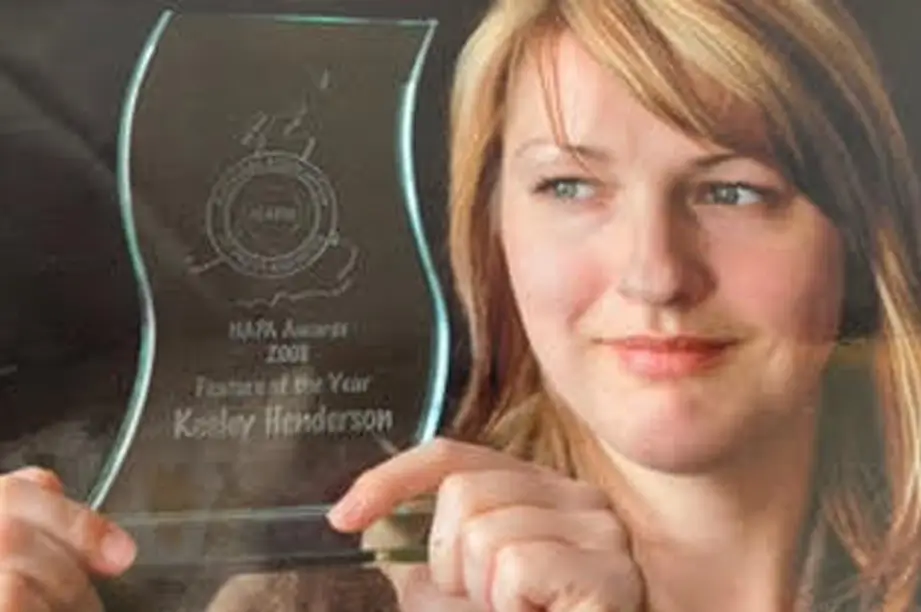
It’s rarely the business with the fanciest logo or the biggest turnover that takes the trophy. More often, it’s the one with a story that sticks. The one the judges couldn’t forget because it felt real, human, and gritty.
That’s where your origin story comes in.
Why your numbers alone aren’t enough
Most award submissions rely heavily on metrics. But without a story, they’re just numbers.
You grew turnover by 35% in a year? Impressive. But unless the judge also understands the grit, risk, and ingenuity it took to get there, your submission won’t stand out from other entries.
Judges can read thousands of entries in a single awards cycle. When every single one sounds like the last, they all blur together.
A stand-out brand story will make your submission unforgettable.
After 20+ years as a journalist, I know how to dig past the clichés, find the details that matter, and shape them into something that gives the judges goosebumps.
Awards panels aren’t made up of robots. They’re people with emotions, memories, and a preference for narratives that make sense. Your revenue growth, client list, or project portfolio might get you shortlisted – but make no mistake, it’s your story that gets you over the line.
What an origin story does in an awards submission
An origin story in this context isn’t a rambling autobiography. It’s a tight, strategic narrative that answers three questions:
- Why did you start?
- What problem were you determined to solve?
- How does that same drive show up in your results today?
It is your chance to position your business as not just successful, but significant. Judges want to feel they are rewarding a company that matters. That’s not sentimentality. It’s human psychology at work.
The four traits of an award-worthy origin story
- Authenticity
Forget the sugar-coated PR version. Awards judges have read enough corporate puffery to smell it a mile off. Tell the truth about your starting point, even if it was messy or unexpected. - Clarity
Keep it clean. You have limited word counts in most submissions, so every sentence has to earn its place. Avoid industry jargon and keep the focus on human impact. - Relevance
Link your story directly to the category you are entering. If the award is for innovation, your origin story should highlight how you broke away from the norm from day one. - Proof
Back your story with evidence. Show how the original problem you set out to solve has actually been solved, with measurable results.
Here’s what that impact looks like
Let’s say you’re a boutique engineering firm entering an award for sustainable design. You could start your submission with:
“Founded in 2014, XYZ Engineering delivers sustainable solutions to the construction industry.”
That’s fine. It’s also instantly forgettable.
Instead, you could start with:
“Ten years ago, our founder stood in the middle of a landfill site the size of a football field. It was filled with construction waste from projects that claimed to be green. That day, she made a decision: if she was going to be in this industry, she was going to change it.”
Same business. Same facts. Different impact. That second version paints a picture, creates tension and sets up the results to follow. By the time you show the judges your carbon reduction statistics and design innovations, they are already invested.
The steps to writing your award story
- Dig into your ‘why’
Revisit the moment your business began. This isn’t always the day you registered the ABN. It could be a conversation, a frustration or a personal experience that lit the fire. - Identify the obstacle
Awards are about achievement, and achievement is meaningless without a challenge to overcome. Show the hurdle you faced and the decision you made to push through. - Show evolution
A good origin story doesn’t stay stuck in the past. Connect the early days to the present, showing how the same values or methods are still delivering results. - Match the category
Make the story work for the specific award. If it’s about customer service, focus on your human approach. If it’s about technology, highlight the early innovation. - Quantify the result
Bring in the hard evidence that proves you didn’t just start with a dream. You turned it into outcomes that matter.
How this works for different industries
- Startups and tech innovators
Awards in these sectors are looking for disruption. Your story should highlight the gap in the market you saw and how you filled it. - Creative agencies
Judges here value originality. Your origin story can showcase the inspiration behind your creative process. - Social enterprises
Your ‘why’ is often your strongest asset. Connect it to your measurable impact. - Professional services In industries like law, accounting or consulting, an origin story can show personality and humanity in a sea of sameness.
The common mistakes to avoid
- Making it a sales pitch
This isn’t your marketing brochure. Judges are turned off by exaggerated claims or hard sells. - Being vague
“We wanted to make a difference” means nothing without specifics. Name the difference and show it in action. - Overcomplicating the language
Keep it clean, conversational and clear. The most powerful stories are often the simplest.
Why this approach works
Humans remember stories far longer than they remember data. A strong origin story will make the judges recall your submission when they are making their final decision, even if they’ve read dozens of others.
It also helps your business beyond awards. The same story can be used in tenders, partnership pitches and media features. It becomes a cornerstone of your brand narrative.
Finally
Winning awards isn’t just about being the best. It’s about proving you are the best in a way that people believe and remember. Your origin story is the bridge between your results and the recognition you deserve.
Get it right, and you won’t just be another name in the shortlist. You’ll be the one the judges are still talking about when the night is over.
If you’re preparing an award submission this year, don’t leave your story to chance. Get in touch and let’s make sure it’s the part the judges can’t forget.